When the Australian Dental Council released its 2027 examination dates in June 2026, it published two calendars, not one: the written examination schedule and the practical examination schedule. Almost everything written about the release since has treated the written calendar alone.
That is the wrong way to read them. The written calendar tells you when you can get into the process. The practical calendar tells you when you can get out of it — and for most candidates the second question is the expensive one. Read side by side, the two schedules also reveal something neither shows on its own: mid-October 2026 is a bottleneck for two entirely different groups of candidates at the same time.
When is the ADC written exam in 2027?
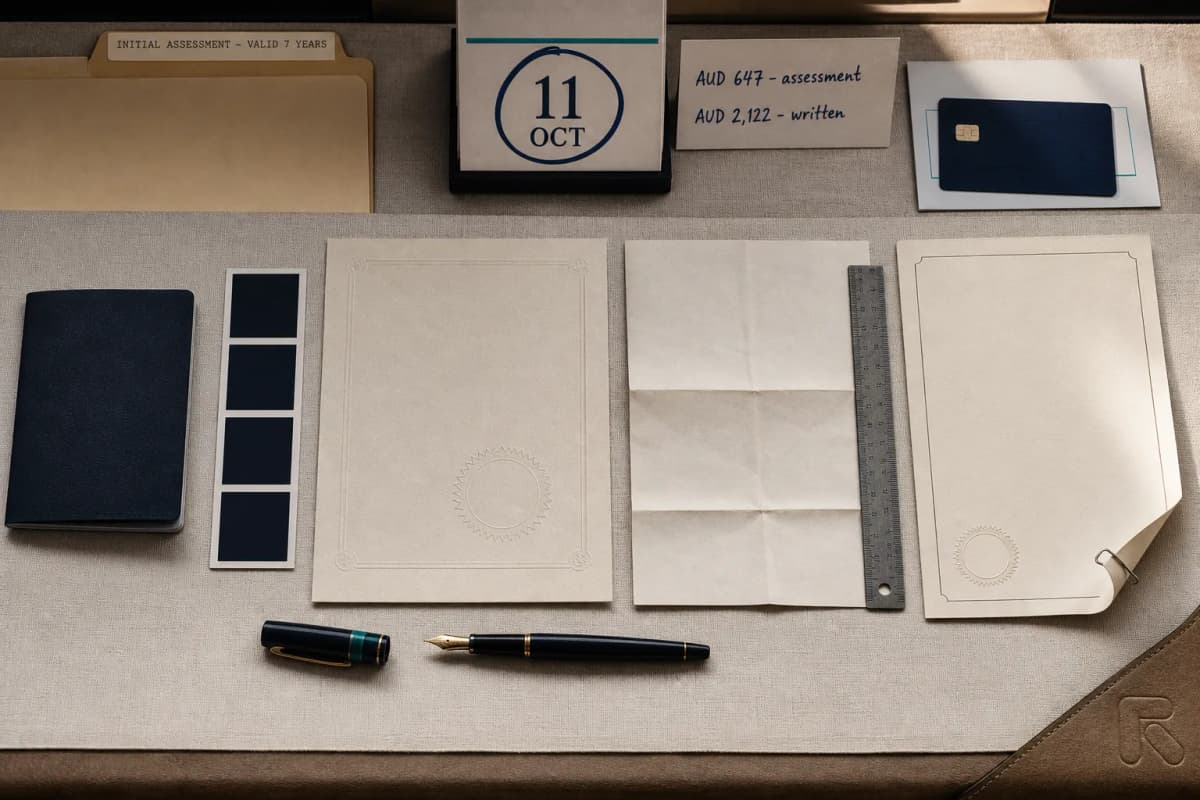
The Australian Dental Council holds two written examination sittings in 2027. Period 1 is sat on 17–18 March 2027; to be eligible you must submit a complete initial assessment application by 11 October 2026, then request a seat during the window of 8–15 December 2026. Period 2 is sat on 8–9 September 2027, with an initial assessment deadline of 11 April 2027 and a seat request window of 8–15 June 2027. The written examination is computer-based and delivered at Pearson VUE test centres. Published fees are AUD 647 for the initial assessment and AUD 2,122 for the written examination. Source: Australian Dental Council, 2027 examination calendar; dates and fees verified 7 August 2026.
Last reviewed: 14 August 2026. Next review: 12 October 2026, the day after the Period 1 initial-assessment deadline. Further checkpoints: 16 December 2026, once the first seat-request window has closed, and 12 April 2027, after the Period 2 deadline. This is dated material — if you are reading it well past the next-review date, confirm against adc.org.au before acting.
The written calendar: three dates per sitting
A written sitting is not one date but three. Your initial assessment must be submitted by a deadline; months later you apply for a seat inside a short window; then you sit.
| Sitting | Initial assessment deadline | Seat application window | Written exam |
|---|---|---|---|
| 2027 · Period 1 | 11 October 2026 | 8–15 December 2026 | 17–18 March 2027 |
| 2027 · Period 2 | 11 April 2027 | 8–15 June 2027 | 8–9 September 2027 |
| 2026 · Period 2 (past sitting, for reference) | 12 April 2026 | 9–16 June 2026 | 16–17 September 2026 |
Two details are routinely misread. The initial-assessment date is a submission deadline, not an outcome deadline — the ADC asks for a complete application by then so there is time to assess it, and says plainly that this is not a guarantee of eligibility. And the seat-application window is only eight days; the link appears on your ADC Connect profile when it opens, venue capacity is limited, and seats are allocated in order of receipt.
The practical calendar: the one that decides when you finish
The practical examination runs on a different rhythm — three periods a year, not two — and its published dates are application windows rather than fixed exam days, because sittings are spread across a broad range afterwards.
| Period | Application window | Examination window |
|---|---|---|
| 2027 · Period 1 | 14–23 October 2026 | January – May 2027 |
| 2027 · Period 2 | 10–19 February 2027 | May – August 2027 |
| 2027 · Period 3 | 16–25 June 2027 | August – December 2027 |
The date-selection period opens 48 hours after each application window closes. Two structural constraints matter more than the dates themselves: you must hold a valid written pass whose expiry falls after the practical exam date, and candidates cannot sit consecutive practical periods — each period runs a waiting list, and places that open up are offered at very short notice.
That second rule is the one people plan around badly. If you sit in Period 1 and do not pass, your next realistic opportunity is Period 3, not Period 2.
October 2026 is a pinch point for both groups
Now put the two tables next to each other and look at the same fortnight.
- 11 October 2026 — the initial-assessment deadline for anyone targeting the March 2027 written exam.
- 14–23 October 2026 — the application window for the first 2027 practical period.
Those two deadlines sit three days apart and belong to opposite ends of the pathway. If you are starting out, mid-October is when your document file has to be complete. If you already hold a written pass, mid-October is when you must be watching ADC Connect for a practical application link. Two very different candidates, one narrow window, and no overlap in what they need to have ready.
Where you are today
The calendars only become actionable once you locate yourself on them.
You have no initial assessment on file. Your binding date is 11 October 2026 — about nine weeks out — and the work is document collection, not revision. The ADC asks for a current passport; a recent passport photograph meeting Australian passport standards; evidence of a change of name where applicable; your dental qualification, certificate or testamur; your academic transcript; and an internship certificate where it formed part of your qualification. The fee is AUD 647 and assessment takes roughly eight weeks. If your university is slow with transcripts — the usual bottleneck — treat September 2027 as the honest target and use the extra time properly.
Your initial assessment is valid and you want a written seat. Your action items are two eight-day windows: 8–15 December 2026 and 8–15 June 2027. Put both in your calendar now, in Australian time. Nothing else about the written exam is time-critical in the same way.
You have passed the written and are waiting on the practical. Your dates are 14–23 October 2026, 10–19 February 2027 and 16–25 June 2027 — and your real constraint is the no-consecutive-periods rule combined with your written expiry date. Work backwards from the last practical period your written pass can still cover, then subtract one period as insurance.
Your initial assessment is approaching expiry. This is the state that costs people everything and the one most worth acting on today. An initial assessment lasts seven years. If it lapses, the ADC's position is that you begin the whole process again with a new application and fee — and any exam results you have already passed become void. A candidate with a written pass sitting in the practical queue can lose both the pass and seven years of file history to one missed administrative date. Renewal, by contrast, is listed at AUD 35 for registration only. Thirty-five dollars against a AUD 647 restart and a voided written pass is the most lopsided arithmetic on this entire pathway. Take your expiry date off ADC Connect today and set a six-month reminder.
The five-year rule, and why it matters more once you see both calendars
Here the ADC's own website contradicts itself, which has let a good deal of misinformation take hold. The summary table on the written-examination page gives validity as 5 years. The body text of that same page, and the practical-examination page, both still say three.
The governing source is the ADC's own December 2025 announcement: validity rises from three years to five for candidates who pass the written examination from March 2026 onwards, and the notice states expressly that the change is not retrospective — no amendments to validity periods already in place for written examinations completed up to and including 2025.
- Passed from March 2026 onward → five years. Anyone sitting a 2027 exam is in this group.
- Passed in 2025 or earlier → three years, unchanged.
Set against the practical calendar, the difference is concrete rather than abstract. Three practical periods a year, minus the no-consecutive-periods rule, means a realistic candidate gets roughly one attempt every eight months. A three-year window allows perhaps four attempts before the pass expires; a five-year window allows seven, with room to prepare properly between them. That is why the cohort you fall into changes the plan and not just the paperwork. Because the official page's body text has not caught up, confirm your own position with the ADC if the number is decisive for you — and if you are in the older cohort, the practical exam's pass rate and what gets candidates through it deserves reading before you spend an attempt.
Frequently asked questions
I already live in Australia on a student or partner visa. Does any of this change?
The calendar does not change, and neither does the requirement for a valid initial assessment. The practical examination is held only at the ADC's Melbourne centre, so candidates elsewhere in Australia still travel for it.
Can I apply for the written and practical exams in the same year?
Only if the written result is released and valid before the practical application you are targeting. Results come out roughly six weeks after the written exam, and the whole cycle from application period to results runs about five months — so a March 2027 written pass realistically points at Period 3 of the practical calendar, not Period 2.
How many times can I sit the ADC written exam?
The ADC sets no limit. Your real constraints are two sittings a year and the validity of your initial assessment.
How much does the ADC process cost in 2027?
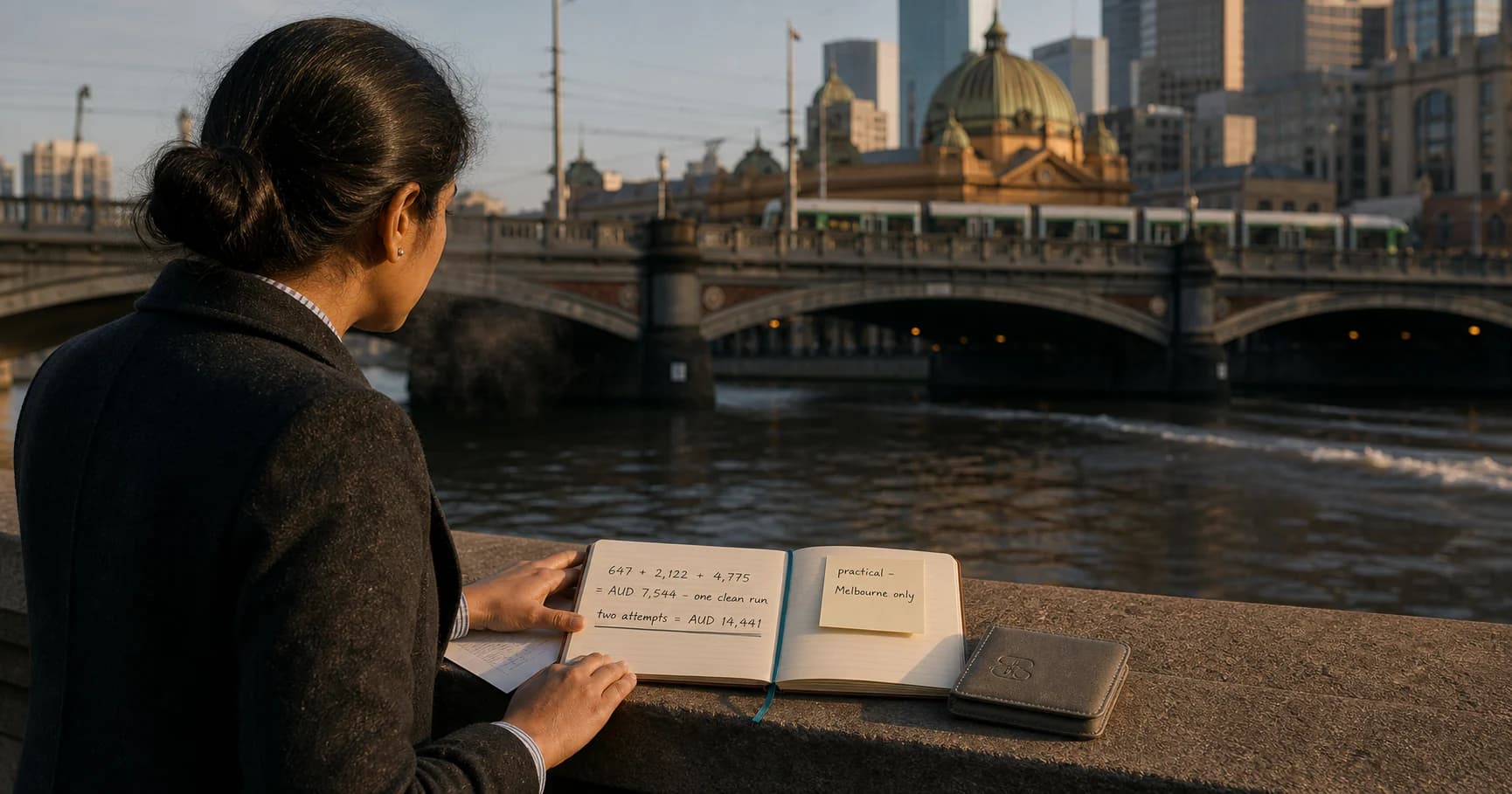
The published figures are AUD 647 for the initial assessment, AUD 2,122 for the written and AUD 4,775 for the practical. The ADC reviews fees periodically — check the official fees page before paying.
Is the 2027 ADC calendar only for dentists?
No. The ADC also published 2027 dates for dental hygiene, dental therapy, combined dental hygiene and dental therapy, and dental prosthetists. The dates here are general dentistry.
Official sources: the 2027 calendar announcement, the initial assessment page, the written examination page, the practical examination page and the written examination validity extension notice — dates and fees verified 7 August 2026. The ADC may amend either calendar; check the official pages before committing money or travel.
The three stages end to end are in the step-by-step ADC guide, and the wider picture in our Australia guide. To place these dates against your own timeline, you can book a consultation.
About this article. RxApply is an independent education provider. It is not affiliated with, approved, endorsed by, or connected to ADC or AHPRA. Official requirements are published at adc.org.au. This is general educational information about published licensure processes — not immigration, legal, or professional advice, and not a substitute for a licensed adviser in the destination country.