If the Australian route had to be described in one sentence: a transparent structure with three defined stages, fairer costs than its rivals, and one genuine bottleneck called the practical exam. The Australian Dental Council (ADC) runs the assessment and the exams; final registration belongs to AHPRA, the national health-practitioner regulator. This guide opens up all three stages with 2026 figures and dates.
Stage one: the Initial Assessment — a file, not an exam
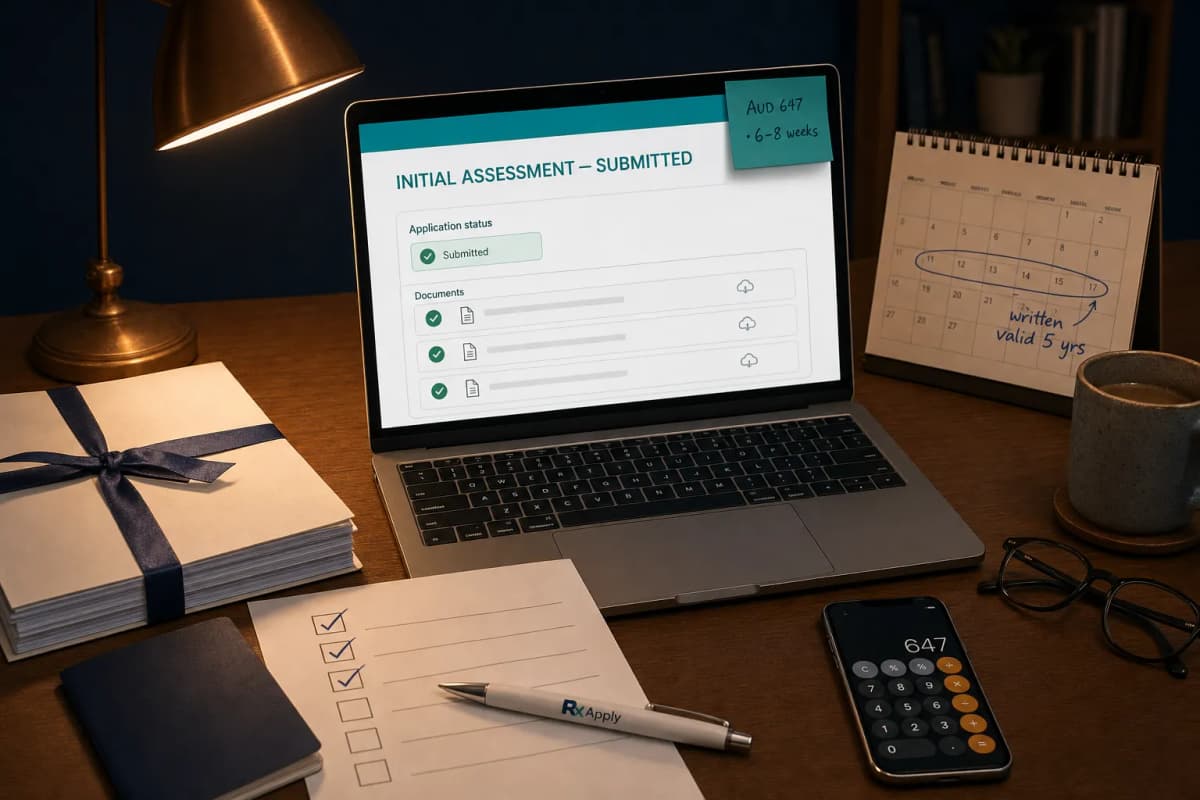
The starting point is the Initial Assessment: a documents-only review of your identity, degree, transcripts, and professional history through the ADC portal (connect.adc.org.au). It costs AUD 647 in 2026, takes roughly 6–8 weeks, and the outcome remains valid for seven years — meaning you can open the file today and schedule the exams calmly.
Two pieces of news that matter especially to Iranian-trained applicants: since January 2025 the ADC no longer requires notarisation, and Australia accepts certified translations from Iranian translation offices directly — a concession Germany does not make. Plainly put: this route has the lightest paperwork of the five destinations. The one discipline it does demand: perfect consistency of names and dates across passport, degree, and certificates — identity mismatches are the most common cause of extra correspondence with the ADC.
A calendar note: your Initial Assessment must be complete before you can register for a given written sitting — for September 2026, for instance, the assessment deadline was April 2026. Working rule: submit the Initial Assessment six months before your target sitting.
Stage two: the written exam — more competitive than advertised
The ADC written exam is computer-based, single-best-answer (SBQ), and runs twice a year — March and September. The next sitting is 16–17 September 2026 with a registration window of 9–16 June 2026 (2027: mid-March and mid-September). For candidates in the region, Dubai and Istanbul are the accessible centres, and visa-free travel to Türkiye makes Istanbul the default for many.
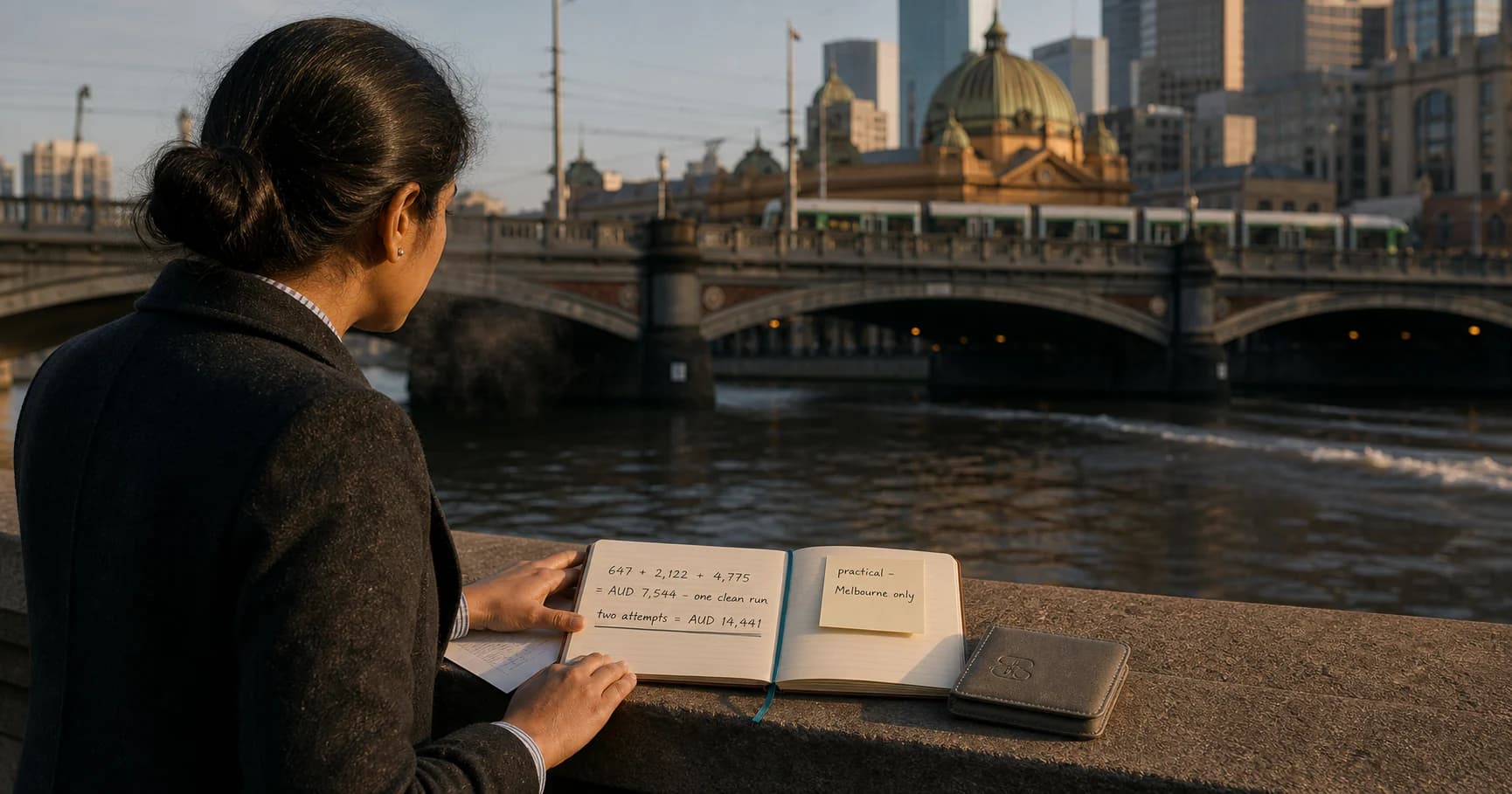
The 2026 fee is AUD 2,122. The pass rate was 12 percent in FY2025 — the lowest in a series that runs 50, 44, 24, 24, 41, 12, so the FY2024 figure was itself a spike rather than a norm. In absolute terms: 404 passes from 3,325 candidates, against 1,209 from 2,925 the year before (ADC Annual Report 2024/25, retrieved 5 August 2026) — this is no longer a formality; the questions are scenario-driven and referenced to Australian guidelines, so your study materials must be Australian-calibrated (ADC handbooks and matching question banks), not just your university texts.
And the most important 2026 change: a written pass sat from March 2026 onward is valid for 5 years, up from 3. Check which cohort you are in before you plan around it — the ADC confirmed it would not amend validity periods already in place, so a pass sat in 2025 or earlier keeps the old three-year clock. For the new cohort, the nerve-racking gap between written and practical (whose queue is long) no longer burns your pass. ADC Candidate Lounge, December 2025 — retrieved 5 August 2026. That turns "bank the written early, prepare the practical properly" — once a risky strategy — into the optimal one.
Stage three: the practical exam — the bottleneck
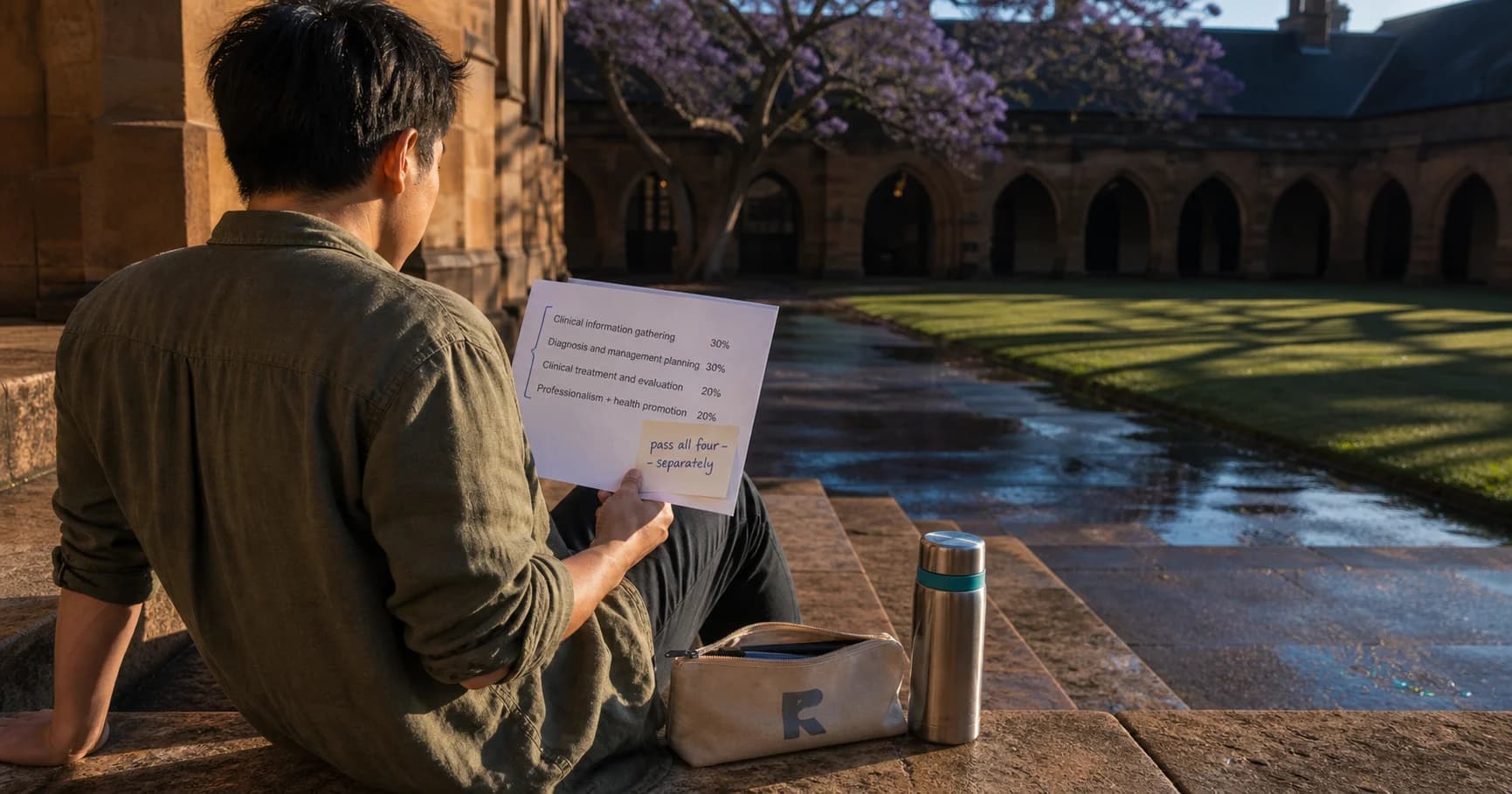
The practical runs over two days, only at the ADC's Melbourne centre: Day 1 technical work on a simulated head, Day 2 clinical and communication stations. Registration costs AUD 4,775, and the realistic cost with a preparation course and consumables is AUD 16,000–20,000. Three windows a year (Jan/Feb, May/Jun, Sep/Oct), 24 seats per session — 28 from Period 2 of 2025, about 300 extra places a year — and a pass rate of 11 percent in FY2025 — everyone who sat, not just first-timers, down from 15 percent in FY2024 (ADC Annual Report 2024/25, retrieved 5 August 2026).
We will not hide that number. What we cannot do is tell you authoritatively why it is that low: the ADC publishes the rate, not a breakdown of causes. Candidates themselves most often describe being caught by the assessment format rather than by the dentistry — but that is what candidates report, not a finding, and you should weigh it as such. The full analysis — and the strategy for passing — is in our dedicated practical-exam article.
The route's consoling feature: failing the practical does not erase your written pass (within its 5-year window); it costs money and time, but the file never resets to zero.
The final stage: AHPRA registration and the English requirement
With both exams passed, your registration file goes to AHPRA. The English requirement bites here — not at the ADC stages — and the score table was updated on 23 April 2026: IELTS Academic 7.0 in each band; or OET at L350/R360/W350/S360; or PTE Academic overall 63 with section minimums (speaking 76, the strictest); or TOEFL iBT overall 91 (R22/L22/W23/S24).
For a candidate based in Iran, the OET is a serious option: it has an authorised in-person centre in Tehran (paper and computer — the home edition is not accepted), and its clinical content sits closer to a dentist's daily language than IELTS's abstract topics. The full four-test comparison is here. Run the language in parallel with written-exam preparation so AHPRA never becomes your waiting room — just mind the two-year score validity.
With AHPRA registration you hold a licence for the whole country — and the profession's running obligations begin: professional indemnity insurance (a registration requirement), 60 CPD hours per three-year cycle, plus the administrative side of life: a Tax File Number, and — until permanent residency — private health insurance, because Iran has no reciprocal health agreement (RHCA) with Australia and Medicare is not yet yours.
The total bill and a sample timeline
The typical all-in cost — assessment, both exams, preparation, language, travel — is AUD 20,000–30,000 over 18–48 months: the cheapest of the five destinations, with the most transparent structure. A realistic sample calendar from abroad: submit the Initial Assessment today → written next March or September (after 8–12 months of preparation) → language in the gap → the practical queue and intensive preparation → practical in one of next year's windows → AHPRA. What follows the licence — work visas, PR, and the fastest passport among the destinations — is in our visas and residency article; and if you keep your work location flexible, the regional opportunity improves both income and the residency path.
Frequently asked questions
Can the Initial Assessment be refused? For graduates of recognised schools with complete documents, substantive refusal is rare; what happens is correspondence to fix gaps — the same name-and-date consistency discussed above.
How long between written and practical? The queue creates its own gap; a good plan converts it into structured practical preparation (now without expiry anxiety, thanks to the 5-year rule). Six to twelve months of focused hands-on work is the pattern among passers.
Can I work as a dental assistant in Australia while waiting? On a visa with work rights, yes — and exposure to the Australian clinical environment is gold for the Day 2 OSCE; a tourist visa carries no work rights, and note the 2026 situation for Iranian visitor-visa holders.
In what order do the costs land? In the order of the route itself: 647 (assessment) → language → 2,122 (written) → the big practical budget (16–20k with preparation) → AHPRA. Your big financial decision point comes after a written pass — until then, the route's financial risk is small; one reason we call Australia the most "testable" destination.
The complete Australian picture — documents to dental chair — in our Australia guide.
About this article. RxApply is an independent education provider. It is not affiliated with, approved, endorsed by, or connected to ADC or AHPRA. This is general educational information about published licensure processes — not legal, immigration, or professional advice.