Virtual OSCEOSCE exam Canadadental registration Ontario

The Virtual OSCE and Provincial Registration: The Last Station of the Canadian Licence (2026)

What happens after NDEB equivalency? The Virtual OSCE (format, the CAD 1,750 fee, 2026 sittings), the NDEB certificate, and registration with the provincial regulators — from Ontario's RCDSO to Quebec's French requirement.

The Virtual OSCE and Provincial Registration: The Last Station of the Canadian Licence (2026)

Everyone writes about the AFK and the NDECC; almost nobody writes about what comes after — which leaves the end of the route foggy for many. The structural truth about Canada is two-layered: the NDEB gives you a national certificate; the licence to practise comes from a province. This article lights up that final layer: the Virtual OSCE, certification, and provincial registration with its differences.

The Virtual OSCE: the last exam — and the friendliest

After completing the equivalency process (or graduating from a QP/BTDPC), you reach the NDEB's certification exam: the Virtual OSCE — the online replacement, since January 2023, for the in-person OSCE.

The 2026 specifics: 200 questions (50 multiple-choice + 150 case-based) under online/test-centre proctoring; fee CAD 1,750; a maximum of 3 attempts (cumulative with the legacy written/OSCE attempts); three sittings a year — in 2026: March, May, and November. A logistics note worth planning around: the March sitting is Canada-only; May and November also run at Prometric centres in the US, Ireland, and Australia.

And after all those mountain passes, a kind statistic at last: the Virtual OSCE has the highest pass rate in the NDEB chain — candidate reports put first attempts around 65–75 percent and the cumulative rate above 80. Its question style is the ACJ's close cousin; if you studied the ACJ properly, preparing for this one is targeted review, not a new project.

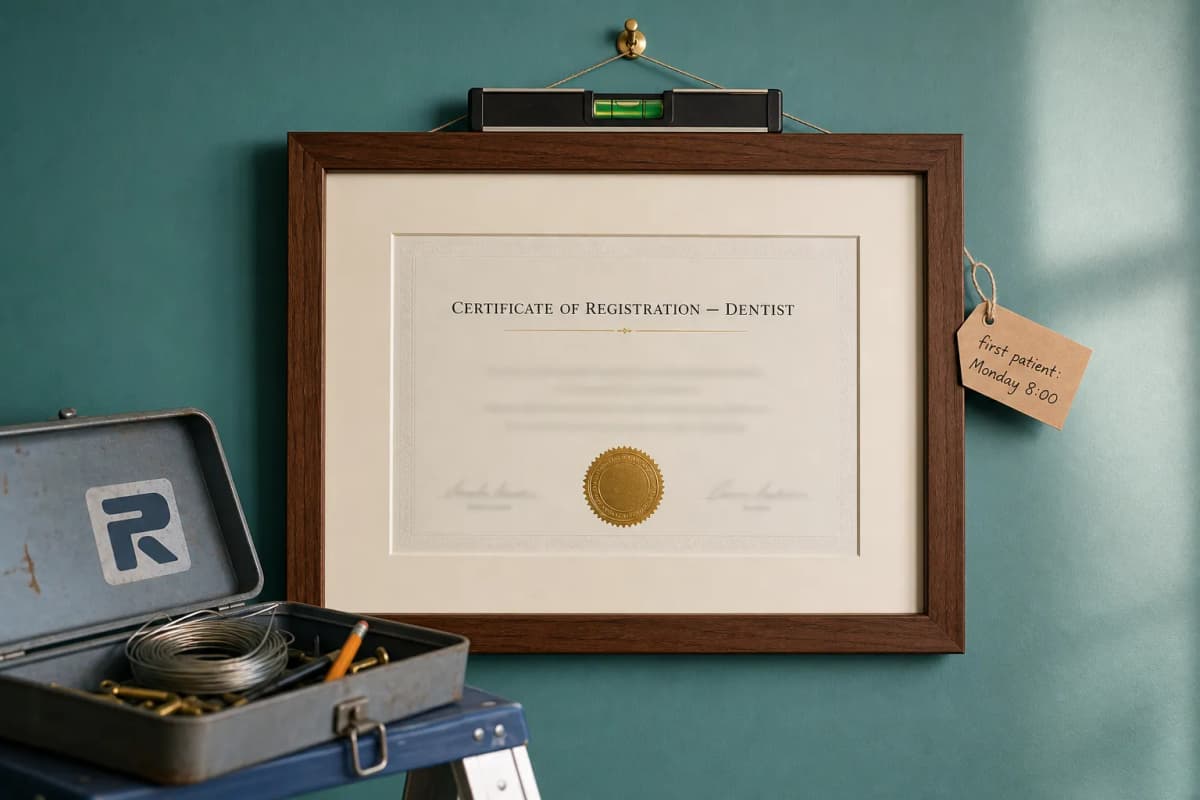
With a pass, the NDEB certificate is issued — the national document of your competence. But you are still not a "licensed dentist."

Provincial registration: where the certificate becomes a licence

Each province has its own regulator — the RCDSO in Ontario, BCCOHP in British Columbia, the CDSA in Alberta, the ODQ in Quebec, and their counterparts elsewhere — and it is the regulator that issues the licence. The common skeleton of a registration file is near-universal: the NDEB certificate, identity and history verification, police clearance, a language score (English; usually IELTS Academic around 6.5+ — unlike the NDEB exams, the regulators do require it), professional liability insurance, and fees.

The provincial differences worth knowing before you choose:

  • Quebec (ODQ): working-level French, verified through the OQLF — without French, Quebec is effectively off the map.
  • Ontario (RCDSO): the biggest market and the most thorough administrative cycle; documents and timing are checked strictly — assemble early.
  • The smaller and Atlantic provinces: leaner processes, aligned with the recruitment incentives of under-served regions.

The golden rule: read your target province's requirements at the start of the route, not the end. An expired language score, or a police clearance obtained too early, are the classic causes of months lost at this very last station.

A sample timeline: from the NDECC to your first patient

To keep it concrete, the calendar of a well-run file — a candidate who passed the NDECC in November and is in Canada:

November: NDECC result; that same week, Virtual OSCE registration for March plus an IELTS Academic booking (for the provincial file) in December. December–February: case-based review for the Virtual OSCE (the ACJ materials plus case banks); a fresh police clearance; the provincial checklist requested. March: the exam; while awaiting results, the provincial forms and liability insurance. April–May: the NDEB certificate issued, the provincial file submitted, the licence — and a job contract negotiated in advance. Total from certificate to licence: weeks, not seasons.

The same calendar, unplanned — an expired language score, an old clearance, late exam registration — stretches comfortably to six or nine months. Same documents, same competence.
The Virtual OSCE and Provincial Registration: The Last Station of the Canadian Licence (2026)

Three last-station mistakes

Mistake one: emptying the tank in the final kilometre. After the NDECC, the "it's basically done" feeling is strong; but the Virtual OSCE has a three-attempt cap, and failing the chain's friendliest exam turns it into a knot. Prepare with the same discipline.

Mistake two: choosing the province at the last minute. Language and document requirements differ, and Quebec has its French story; pick the province alongside the NDECC so the provincial file runs in parallel — and if the final destination is open, satisfy the union of two likely provinces' requirements.

Mistake three: ignoring the job market in the choice of regulator. Earning an Ontario licence and then discovering the better offers sit in Alberta and Saskatchewan means another administrative round. Read the provincial income map before choosing your regulator.

After the licence: week one's three tasks

Liability insurance and the province's CPD rules; the financial-credit file (which, if practice ownership is on your horizon, counts from day one); and, if PR is still pending, aligning your work status with the Express Entry file — Canadian work experience lifts your CRS score meaningfully.

Frequently asked questions

Can the Virtual OSCE be taken before the NDECC? The order of the equivalency process is the NDEB's; the certificate issues once your route's components are complete — plan from your own file's status in the NDEB portal.

Three attempts exhausted — dead end? The cumulative cap of three is serious; hence the repeated advice — prepare for this "easier" exam with the same rigour as the hard ones.

Can I sit it from outside Canada? The announced centres are in Canada, the US, Ireland, and Australia; candidates elsewhere usually take this station with a trip, or together with their move to Canada.

How big is this station in the total budget? The exam at 1,750 plus provincial registration and insurance — light against the rest of the route, provided the file is error-free.


The complete map, AFK to dental chair, in our Canada guide.

RxApply

RxApply

The Virtual OSCE and Provincial Registration: The Last Station of the Canadian Licence (2026)

What happens after NDEB equivalency? The Virtual OSCE (format, the CAD 1,750 fee, 2026 sittings), the NDEB certificate, and registration with the provincial regulators — from Ontario's RCDSO to Quebec's French requirement.

The Virtual OSCE and Provincial Registration: The Last Station of the Canadian Licence (2026)

Everyone writes about the AFK and the NDECC; almost nobody writes about what comes after — which leaves the end of the route foggy for many. The structural truth about Canada is two-layered: the NDEB gives you a national certificate; the licence to practise comes from a province. This article lights up that final layer: the Virtual OSCE, certification, and provincial registration with its differences.

The Virtual OSCE: the last exam — and the friendliest

After completing the equivalency process (or graduating from a QP/BTDPC), you reach the NDEB's certification exam: the Virtual OSCE — the online replacement, since January 2023, for the in-person OSCE.

The 2026 specifics: 200 questions (50 multiple-choice + 150 case-based) under online/test-centre proctoring; fee CAD 1,750; a maximum of 3 attempts (cumulative with the legacy written/OSCE attempts); three sittings a year — in 2026: March, May, and November. A logistics note worth planning around: the March sitting is Canada-only; May and November also run at Prometric centres in the US, Ireland, and Australia.

And after all those mountain passes, a kind statistic at last: the Virtual OSCE has the highest pass rate in the NDEB chain — candidate reports put first attempts around 65–75 percent and the cumulative rate above 80. Its question style is the ACJ's close cousin; if you studied the ACJ properly, preparing for this one is targeted review, not a new project.

With a pass, the NDEB certificate is issued — the national document of your competence. But you are still not a "licensed dentist."

Provincial registration: where the certificate becomes a licence

Each province has its own regulator — the RCDSO in Ontario, BCCOHP in British Columbia, the CDSA in Alberta, the ODQ in Quebec, and their counterparts elsewhere — and it is the regulator that issues the licence. The common skeleton of a registration file is near-universal: the NDEB certificate, identity and history verification, police clearance, a language score (English; usually IELTS Academic around 6.5+ — unlike the NDEB exams, the regulators do require it), professional liability insurance, and fees.

The provincial differences worth knowing before you choose:

  • Quebec (ODQ): working-level French, verified through the OQLF — without French, Quebec is effectively off the map.
  • Ontario (RCDSO): the biggest market and the most thorough administrative cycle; documents and timing are checked strictly — assemble early.
  • The smaller and Atlantic provinces: leaner processes, aligned with the recruitment incentives of under-served regions.

The golden rule: read your target province's requirements at the start of the route, not the end. An expired language score, or a police clearance obtained too early, are the classic causes of months lost at this very last station.

A sample timeline: from the NDECC to your first patient

To keep it concrete, the calendar of a well-run file — a candidate who passed the NDECC in November and is in Canada:

November: NDECC result; that same week, Virtual OSCE registration for March plus an IELTS Academic booking (for the provincial file) in December. December–February: case-based review for the Virtual OSCE (the ACJ materials plus case banks); a fresh police clearance; the provincial checklist requested. March: the exam; while awaiting results, the provincial forms and liability insurance. April–May: the NDEB certificate issued, the provincial file submitted, the licence — and a job contract negotiated in advance. Total from certificate to licence: weeks, not seasons.

The same calendar, unplanned — an expired language score, an old clearance, late exam registration — stretches comfortably to six or nine months. Same documents, same competence.

The Virtual OSCE and Provincial Registration: The Last Station of the Canadian Licence (2026)

Three last-station mistakes

Mistake one: emptying the tank in the final kilometre. After the NDECC, the "it's basically done" feeling is strong; but the Virtual OSCE has a three-attempt cap, and failing the chain's friendliest exam turns it into a knot. Prepare with the same discipline.

Mistake two: choosing the province at the last minute. Language and document requirements differ, and Quebec has its French story; pick the province alongside the NDECC so the provincial file runs in parallel — and if the final destination is open, satisfy the union of two likely provinces' requirements.

Mistake three: ignoring the job market in the choice of regulator. Earning an Ontario licence and then discovering the better offers sit in Alberta and Saskatchewan means another administrative round. Read the provincial income map before choosing your regulator.

After the licence: week one's three tasks

Liability insurance and the province's CPD rules; the financial-credit file (which, if practice ownership is on your horizon, counts from day one); and, if PR is still pending, aligning your work status with the Express Entry file — Canadian work experience lifts your CRS score meaningfully.

Frequently asked questions

Can the Virtual OSCE be taken before the NDECC? The order of the equivalency process is the NDEB's; the certificate issues once your route's components are complete — plan from your own file's status in the NDEB portal.

Three attempts exhausted — dead end? The cumulative cap of three is serious; hence the repeated advice — prepare for this "easier" exam with the same rigour as the hard ones.

Can I sit it from outside Canada? The announced centres are in Canada, the US, Ireland, and Australia; candidates elsewhere usually take this station with a trip, or together with their move to Canada.

How big is this station in the total budget? The exam at 1,750 plus provincial registration and insurance — light against the rest of the route, provided the file is error-free.


The complete map, AFK to dental chair, in our Canada guide.

RxApply

About the author

RxApply

The RxApply editorial team — coaches, alumni, and operations — writes field notes from the cohort. Each article lists the coach who lived the path it describes.

Related field notes

More from the blog.

Curated by coaches. Read in order if you’re starting from zero.

All field notes
RxApply