The Canadian route has a famous fork: the exam-based road (Equivalency, with the three NDEB exams) and the university road — QP or Degree Completion programs that take you into a Canadian dental school for two to three years and send you out with a Canadian DDS or DMD. The second road is longer and more expensive; so why do hundreds compete for it every year? Because it gives something the exams cannot. This article shows both faces of the coin.
What exactly is a QP, and what does it give you?
A Qualifying Program is a bridge into the heart of a Canadian dental school: you typically enter the third year of the DDS program, spend two (sometimes nearly three) years in coursework and clinic, and graduate with the Canadian degree. The output that matters more than the parchment: a QP graduate owes the NDEB no Equivalency examination at all — no AFK, no ACJ, no NDECC — and enters the Certification Process directly, where the Virtual OSCE is the only exam left. The AFK still appears in most candidates' files, but as the universities' admissions screen rather than an NDEB requirement, and the programmes differ — check each one's own admission page.
That is the road's real payoff: the NDECC bottleneck — 40.6 percent first-attempt on the NDECC clinical skills component in 2025, 38.33 percent across all attempts (NDEB published results) disappears, replaced by two years of structured training, fluency in the Canadian standard of practice, and a faculty network.
The 2026 map of active programs
Five main programs are running:
- IDAPP — University of Toronto: the best known and most competitive; the country's biggest faculty in its biggest job market
- McGill (Montreal): the DMD completion program with a globally weighty name; factor in francophone Quebec life
- IDDP — University of Saskatchewan
- IDDP — University of Manitoba: both in lower-cost provinces with active immigration streams
- ASPIDG — Western (Schulich, Ontario)
And important 2026 news: UBC's IDDCP is suspended until further notice (confirmed May 2026). If your target list is old, refresh it.
Entry: the three pillars of a file
Details differ program to program, but the skeleton is shared:
- Status: virtually all QPs require Canadian PR or citizenship — the same pattern as the BTDPC. For an applicant abroad, the right order is: residency first (Express Entry), QP application second.
- The AFK score: the competition's entry ticket; the top programs effectively screen on it. A bare pass is not enough — Toronto and McGill seats go to high scores.
- Language and interview: usually IELTS Academic 6.5+ (programs vary), an interview, and at some programs a bench/practical assessment.
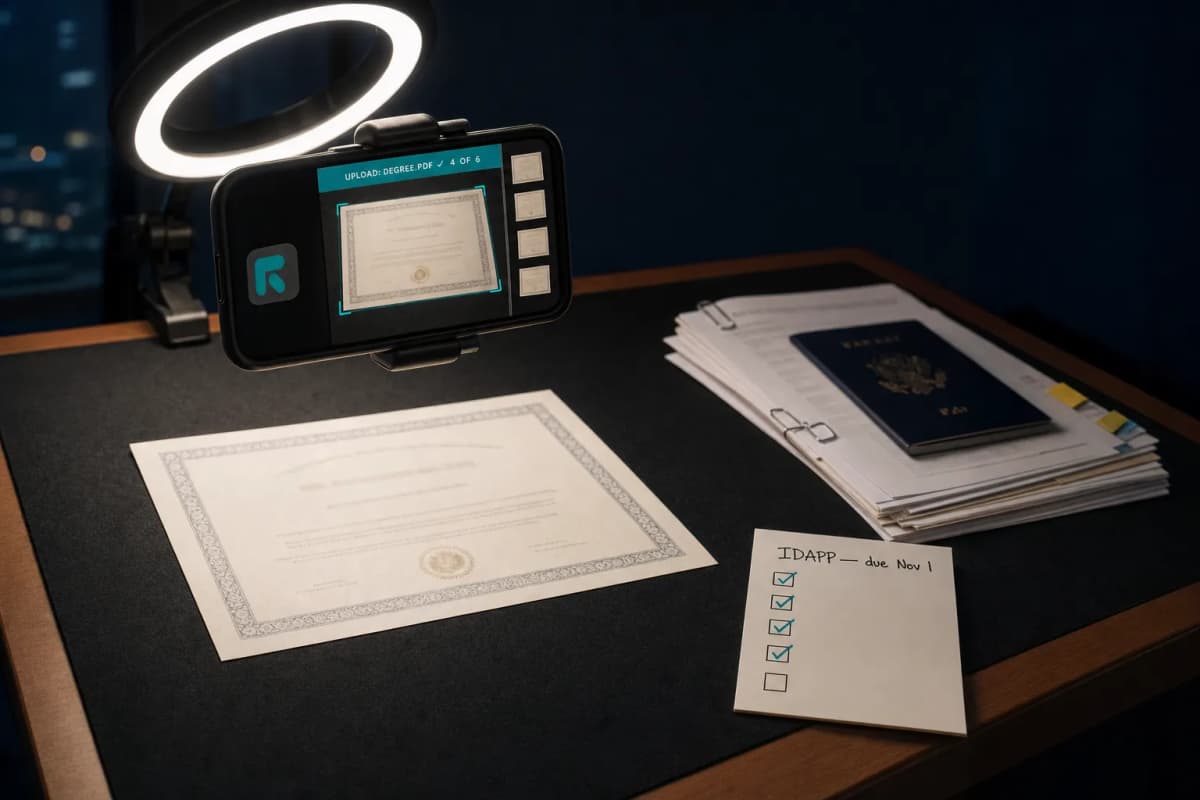
The cost: the heaviest line on the Canadian route
QP tuition and total costs run CAD 100,000–250,000 — several multiples of the exam route's 35–65k — plus two to three years of living costs without full income. On the other side of the scale: the NDECC risk deleted, a Canadian degree, and entry to the job market from inside a faculty's network — visible in the quality of first job offers.
For an honest decision, three questions to yourself: How confident am I, truly, in simulator-format exams? (The more confident, the more rational the exam route.) Do I have six-figure capital without straining the family? And can I accept being a student again for two years — with all the humility that asks?
QP, BTDPC, or the exam route? The decision table
Three roads side by side:
- The exam route (Equivalency): cheapest (35–65k), fastest when it goes well, riskiest (the NDECC). For the clinically strong and capital-light.
- The BTDPC: the golden middle — 8 months, about 32k, NDECC exempt; but only 30 seats and IELTS 7.0 in every band. For outstanding, patient files.
- The QP: the most expensive and longest, the least risky, the deepest integration into the Canadian system. For those whose capital exists and whose risk tolerance prices the NDECC's removal at six figures.
The strategic note common to all three: the AFK score is the key to every door. Before any final decision, sit the AFK with the best preparation you can build; a strong score triples your options, and a weak one effectively confines you to the exam-only road.
Three applicant scenarios — which is you?
Scenario one: Dr. N., 31, newly settled in Toronto with PR, a high AFK. The natural IDAPP and Western candidate; applies to the BTDPC in the same season. If neither lands, the exam route continues — for her, the QP is the optimal option, not the only one. The advice: apply to several programs at once, and register for the next ACJ so the year is never empty.
Scenario two: Dr. M., 40, ten years of practice, in Iran, no status. The QP is not currently reachable (no PR). The right road: AFK/ACJ from home plus an Express Entry file built on documented experience; the QP/BTDPC decision comes after residency. Reading this article now means designing the plan for three years ahead — today.
Scenario three: Dr. S., 28, B2 French, married to a Canadian. Laval's French-language BTDPC and Quebec's programs carry different weight for her; the francophone lane is less crowded, and the OQLF question is already answered.
Frequently asked questions
Can QP tuition be financed? The big banks run professional student lines of credit for health disciplines; a PR with a co-signer or credit history has a real chance — start with the same banks' healthcare divisions.
Can I work during a QP? The program is full-time and intense; meaningful side work is unrealistic — close the two-to-three-year budget before starting.
Does the Canadian QP degree count in the US? A graduate of a Canadian (CODA-equivalent) faculty is treated on par with US graduates in many states — for families with a two-country horizon, that is the QP's hidden bonus.
The full picture of Canada's options in our Canada guide.
About this article. RxApply is an independent education provider. It is not affiliated with, approved, endorsed by, or connected to NDEB or any Canadian dental faculty.