2026 is the most consequential year for the ORE in a decade. In March, the General Dental Council (GDC) handed delivery of the exam to UCL Consultants, and three things changed at once: capacity, fees, and the calendar. Part 1 now costs £485 and runs four times a year at 600 seats a sitting — 2,400 places annually; Part 2 costs £6,967; and the published calendar runs to May 2027. If you are weighing the UK route, this is the current picture without the noise.
| Part 1 | Part 2 | |
|---|---|---|
| Exam fee | £485 — down 17 percent | £6,967 — up 65 percent |
| Other charges | £115 application processing, so £600 in total | Course, instrument kit and mocks typically bring the stage to £11,500–£13,000 |
| Seats a year | 2,400 — four sittings of 600 | 944 across five sittings; GDC target of 1,500 by Year 3 |
| Sittings | 25–26 August 2026, November 2026, February 2027, May 2027 | September 2026, November 2026, February 2027, and two more across spring–summer 2027 |
| Recent pass rate | 73–75 percent across the 2025 series | 66–76 percent across 2025; November 2025 at 76 percent |
| Format | Two 100-question papers, six hours, London | Four days: manikin, OSCE, DTP, Medical Emergencies |
What is the ORE, and who needs it?
The Overseas Registration Examination is the gateway to the GDC register for dentists qualified outside the UK and Europe. Passing both parts — together with an English score and a complete file — leads to full registration: the same licence a UK graduate holds.
The language requirement is precise and strict: IELTS Academic with an overall 7.0 and at least 6.5 in every band; the GDC accepts neither OET nor TOEFL nor the IELTS Online (home) edition. If you are testing from Iran, note that IELTS UKVI seats are limited there — close out the language earlier than the exam calendar demands.
Part 1: knowledge
ORE Part 1 is a computer-based exam in London: two 100-question single-best-answer papers (six hours in total) — Paper A on clinically applied science and disease, Paper B on clinical dentistry plus law, ethics, and health and safety — all framed around UK knowledge and understanding. Even familiar topics must be read through UK guidelines, not just your university textbooks. You may attempt it a maximum of 4 times, and results arrive within 30–40 working days.
The good 2026 news concerns money and seats: the exam fee fell 17 percent to £485 (plus a £115 application processing fee — £600 in total), and capacity rose to 4 sittings a year at 600 seats each — 2,400 places annually, a level the GDC has confirmed through Year 3 of the contract. For candidates who spent years behind the seat lottery, that number means something real.
The calendar: the first sitting under the new contract on 25–26 August 2026 (confirmed in the GDC's 6 May 2026 announcement and listed on its ORE Part 1 page), then November 2026, February 2027, and May 2027. Recent pass rates run around 65–70 percent — a serious but fair exam for the prepared.
Part 2: skills
Part 2 is a four-day exam with four components: an operative test on a manikin (two major tasks and one minor — failing any single task fails the whole manikin section), ten-minute OSCE stations with actors, a Diagnosis and Treatment Planning paper (DTP), and a Medical Emergencies practical (ME).
Here the fee news runs the other way: the exam now costs £6,967, up 65 percent — specialist clinical facilities, examiners, UCLC's capital investment, and newly applicable VAT. With a preparation course, an instrument kit, and mock exams, the true cost of this stage typically lands between £11,500 and £13,000.
Year-one capacity is 944 seats across 5 sittings (first sitting September 2026, confirmed by the GDC on 9 March 2026; then November 2026, February 2027, and two more across spring–summer 2027), and the GDC has confirmed a target of 1,500 seats by Year 3. Pass rates fluctuate, and the 2025 series runs higher than 2024's: Part 1 at 73–75%, Part 2 between 66% and 76% across the year, with November 2025 at 76%. For contrast, April 2024 came in around 59% and November 2024 around 70%. The component breakdown is instructive: DTP around 97 percent, Medical Emergencies 88, OSCE about 80, with the hardest ground in clinical management and the manikin at around 62. In other words, your preparation investment belongs above all in handwork and manikin protocol. Successful candidates typically prepare full-time for three to five months.
The real budget and timeline
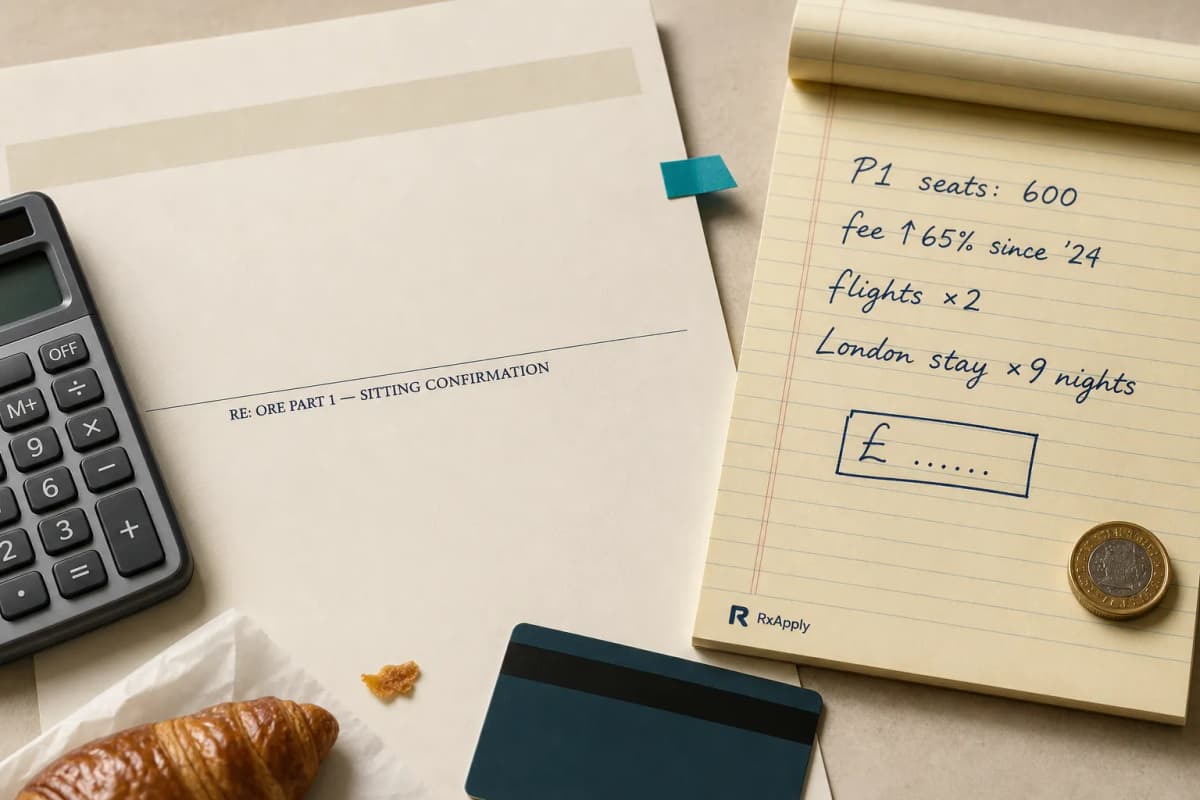
The whole UK route — exams, courses, language, documents, travel, and accommodation through GDC registration — typically costs £25,000–45,000 and takes about 18 months in the optimistic case: the fastest licence among the five major destinations. Both parts run only in London — Part 1 at one of three GDC-appointed venues (Teamco, Escalla or Tobacco Dock) — so put visas and flights into the budget from day one. The five cost layers are unpacked in our UK cost article.
Take two under-discussed registration requirements seriously as well: the GDC requires 1,600 hours of post-qualification general clinical experience — for many internationally trained dentists, a properly documented service period covers it, provided the certificate itemises hours (details here) — and a hands-on ILS (Immediate Life Support) certificate is part of the registration file; an online course does not count.
What happens after you pass?
GDC registration ends the paperwork and starts the career. To work in the NHS you need a Performer Number, reached via PLVE — since 2023 a structured conversation with no separate form or fee — totalling 6–9 months from GDC registration to an active number (the full PLVE guide). The market for registered dentists is strong, with typical earnings reported at £75,000–150,000. The residency picture — from the Health and Care Worker visa to the new settlement rules — is analysed in our ILR article.
Frequently asked questions
How do I register from abroad? Through a GDC online account, with authenticated documents and certified translations bearing a solicitor's or notary's stamp; sittings and seat booking are announced through the registration system — be ready the moment the window opens.
Is there a route without the ORE? Yes — the Royal College of Surgeons' LDS is a full alternative (around 1,000 Part 1 places in 2026, at the same IELTS 7.0/6.5 standard as the ORE — the real difference is that LDS also accepts TOEFL, which the ORE does not), and temporary registration exists for defined academic/NHS roles but never converts to full registration — the complete comparison is in ORE alternatives.
How long does a Part 1 pass remain valid for Part 2? There is a limited window; plan the two parts as one continuous campaign and confirm the current rule with the GDC on booking day.
What if I fail one component of Part 2? Components are assessed separately but the retake rules are the GDC's to set; what is certain is that the manikin — where one failed task fails the section — is the riskiest component. Concentrate your preparation there.
The full UK route — language to visa — in our UK guide.
About this article. RxApply is an independent education provider. It is not affiliated with, approved, endorsed by, or connected to GDC or UCL Consultants Ltd.